
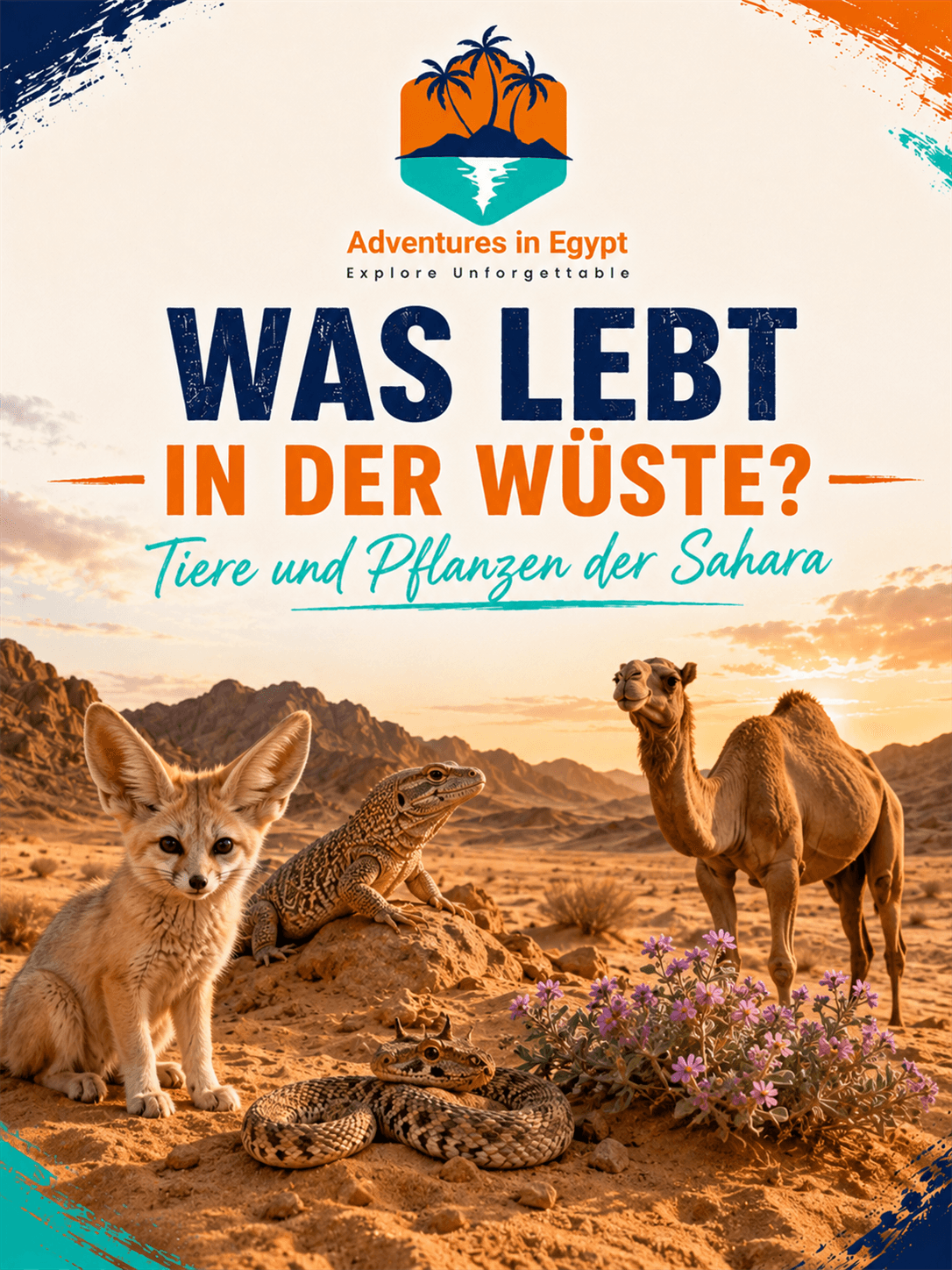
The Sahara is the world's largest desert — and by no means lifeless. Plants and animals have adapted over millions of years to extreme heat, drought and temperature swings.
Animals of the Egyptian desert
*Fennec fox (Vulpes zerda)* — Tiny desert fox with enormous ears (for heat dissipation). Nocturnal, rarely seen, but its shadow by moonlight — a dozen times enlarged — is unforgettable.
*Desert hedgehog (Paraechinus aethiopicus)* — Small, spiky nocturnal creature. Hunts insects and small reptiles. Occasionally turns up in Bedouin camps.
*Egyptian cobra (Naja haje)* — Yes, there are snakes. Encounters are very rare, as they avoid humans. Take care when turning over rocks.
*Saharan horned viper (Cerastes cerastes)* — Perfectly camouflaged in sand, buried during the day. Nocturnal and shy.
*Dabb lizard (Uromastyx)* — Large, stocky lizard, up to 60 cm long. Active during the day, loves sunbathing, completely harmless and curious.
*Scorpions* — Present, but shy. When camping: always shake out shoes.
Plants of the Sahara
*Acacia trees* — The iconic desert trees with their umbrella-shaped crowns. Deep roots reach groundwater.
*Camel thorn* — Spiny shrub, the main food of camels. Blooms pink after rain.
*Desert watermelon* — Small, bitter melon that grows without any rain from seeds that wait decades in the sand.
*Succulents* — Various species that store water in leaves and stems.
**Desert after rain — a miracle** When it rains in the Sahara (rare, but it happens), the desert literally explodes into bloom. Seeds that have waited for years germinate within hours.