
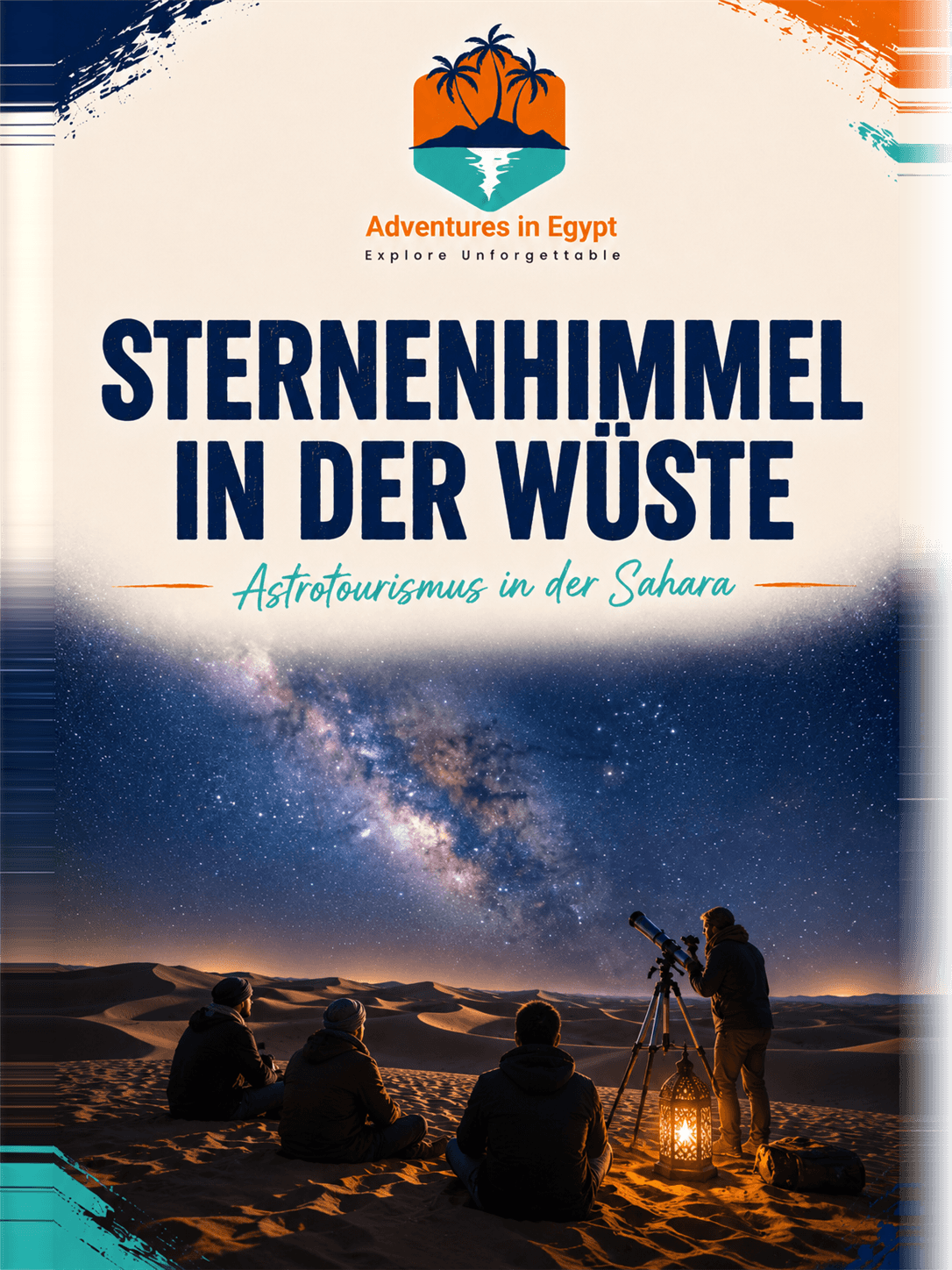
Imagine lying on your back in the warm desert sand. Around you, absolute silence. Above you: the Milky Way, so clear and dense it looks like a glowing veil. This is not a film — this is the Sahara at night.
**Why is the starry sky so extraordinary?** Hurghada and the surrounding desert have almost no light pollution — the nearest large city is far away, and there is no artificial lighting in the desert. The result: a sky with over 3,000 stars visible to the naked eye. In Europe or the USA, light pollution typically reduces this to fewer than 200.
**What do you see in the Sahara?** - The Milky Way as a band across the sky — particularly impressive from March to October - Constellations: Orion, Scorpius, Ursa Major and Minor, Cassiopeia - Planets: Venus, Mars, Jupiter and Saturn visible to the naked eye - Shooting stars: more frequent than in the city, as no stray light interferes - Satellites: points of light moving slowly across the sky
**When is the best time?** New moon periods are ideal — without moonlight the stars are at their brightest. Summer (June–August): the Milky Way stands high and wide. Winter (December–February): Orion and its surroundings dominate.
**How do you experience it with us?** Our sunset safaris end at the Bedouin camp — after tea and the campfire, the stargazing hour begins. Binoculars available on request.